
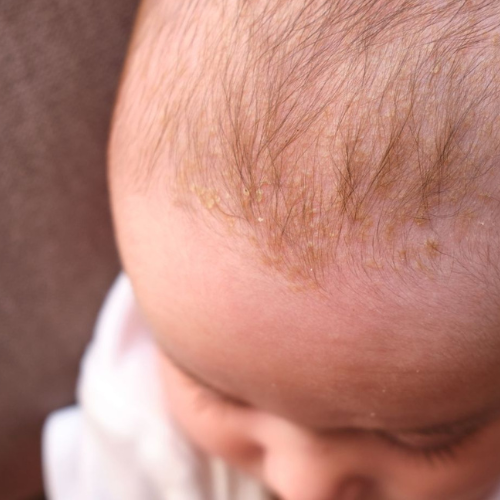
You lean in for that irresistible newborn sniff and notice something unexpected: flaky, yellowish patches clinging to your baby’s scalp. Before you panic, take a breath. What you are looking at is most likely cradle cap, one of the most common and harmless skin conditions in newborns, and raw coconut oil is one of the gentlest, most time-tested ways to deal with it.
At Tru-CocoB, we believe the best answers for baby skincare are often the simplest ones. Raw coconut oil has been used for generations across tropical cultures as a nurturing ingredient for newborn skin. Today, modern science is catching up with what grandmothers across South Asia, Southeast Asia, and the Pacific Islands have known for centuries: a small amount of cold-pressed, unrefined coconut oil on a baby’s scalp can soften and lift those stubborn flakes without any harshness, without any chemicals, and without any stress.
Cradle cap, medically known as seborrheic dermatitis, is a condition that causes greasy or dry, scaly patches to form on a newborn’s scalp. It can occasionally spread to the eyebrows, behind the ears, or along skin folds. Despite its slightly alarming appearance, it is not contagious, not caused by poor hygiene, and it causes no discomfort to your baby.
It is believed to result from overactive sebaceous glands in the skin, possibly triggered by hormones passed from mother to baby during pregnancy. Those glands produce more oil than the skin needs, and that oil traps dead skin cells against the scalp, forming the characteristic yellowish crusts. Most cases resolve on their own within weeks to months, but gentle treatment speeds the process and keeps your baby comfortable in the meantime.
Common signs to look for:
Not all oils are created equal, and at Tru-CocoB we are particular about the difference raw, cold-pressed coconut oil makes compared to refined alternatives. The refining process strips away many of the compounds that make coconut oil genuinely effective on skin. What is left in refined oil is largely just fat. What is left in raw coconut oil is something far more complete.
Raw coconut oil penetrates the outer layer of the scalp to soften dry, hardened flakes from within rather than just coating the surface.
Lauric acid, abundant in raw coconut oil, has documented antifungal properties that help keep the scalp environment balanced.
Natural polyphenols and vitamin E calm scalp redness and reduce irritation without synthetic compounds touching your baby’s skin.
The fatty acid profile physically loosens the bond between dried skin and scalp, allowing flakes to lift away without scraping or picking.
After washing, a trace of coconut oil helps seal hydration into the scalp, preventing the dryness cycle from restarting the next day.
Raw coconut oil contains no additives, fragrances, or synthetic preservatives that could irritate even the most sensitive baby skin.
Lauric acid makes up nearly half of the fatty acid content in raw coconut oil. It is the same compound found in human breast milk that protects newborns from infection. Nature was not being careless with that coincidence.
Tru-CocoB Research Notes| Scalp Condition | Suitable? | What Raw Coconut Oil Does |
|---|---|---|
| Mild Cradle Cap | Excellent | Softens and lifts flakes noticeably within one to two sessions |
| Thick or Stubborn Crusting | Great | Penetrates deeply with repeated use over several days |
| Dry Scalp Without Cradle Cap | Excellent | Restores scalp moisture and prevents further dryness |
| Redness Around Scalp | Good | Anti-inflammatory properties calm visible irritation over time |
| Sensitive or Reactive Skin | Patch Test First | Usually well-tolerated but always test on the wrist before the scalp |
| Known Coconut Sensitivity | Avoid | Consult your pediatrician and choose an alternative oil |
This routine takes under half an hour and requires nothing more than a coin-sized amount of raw coconut oil, a soft baby brush, and mild shampoo. It can double as a calming, bonding ritual between you and your newborn.
Before touching your baby’s scalp, wash your hands thoroughly. You want to apply the oil without introducing any bacteria to the area.
Scoop a small amount of Tru-CocoB raw coconut oil and warm it between your palms until it melts into a light, silky liquid. Raw coconut oil solidifies at room temperature but liquefies quickly with gentle hand heat.
Using your fingertips, massage the oil in soft circular motions across the scalp, focusing on areas where you see flaking or crusting. Do not press hard or attempt to lift flakes manually at this stage. Let the oil begin its work.
This is the most important part of the process. The fatty acids in raw coconut oil need time to penetrate the dried skin and begin lifting flakes from below. A soft cloth wrapped loosely around your baby’s head keeps them warm and cozy during this time.
Using a soft-bristled baby brush or fine-tooth comb, gently sweep away loosened flakes in the direction of hair growth. You will notice them coming away easily. Do not force flakes that are still firmly attached. It is better to repeat the treatment than to cause irritation.
This step is critical. Oil left on the scalp can feed the yeast that contributes to seborrheic dermatitis. Use a mild, fragrance-free baby shampoo and rinse thoroughly with lukewarm water until no oiliness remains.
Gently pat the scalp dry with a soft towel. Most parents see meaningful improvement after two to three sessions. Repeat the routine every two to three days until the cradle cap clears fully.
Consistency is what makes this treatment work. Here is a realistic timeline most parents experience when using Tru-CocoB raw coconut oil for cradle cap relief:
A few habits that seem intuitive can actually make cradle cap worse or delay healing. These are worth keeping in mind each time you treat your baby’s scalp.
Before applying raw coconut oil to your baby’s scalp, apply a small amount to the inside of the wrist or behind the ear. Leave it for 20 minutes, wipe clean, and wait 24 hours. If there is no redness, itching, or swelling, the oil is safe to use on the scalp. This is especially important for babies with a family history of skin sensitivities or eczema.
Cradle cap responds well to gentle home care in the vast majority of cases. However, there are situations where professional guidance is the right next step.
Cradle cap is one of the first little challenges of new parenthood, and raw coconut oil is one of the simplest, most trustworthy tools you have for it. It works with your baby’s skin rather than against it, softening and releasing flakes the way nature intended without chemicals, without stress, and without guesswork. Tru-CocoB raw coconut oil is cold-pressed, unrefined, and handled with the same care you give your newborn. Start with one session, be patient, and let the coconut do what it has always done.
Leave a Reply
Your email address will not be published. Required fields are marked *