
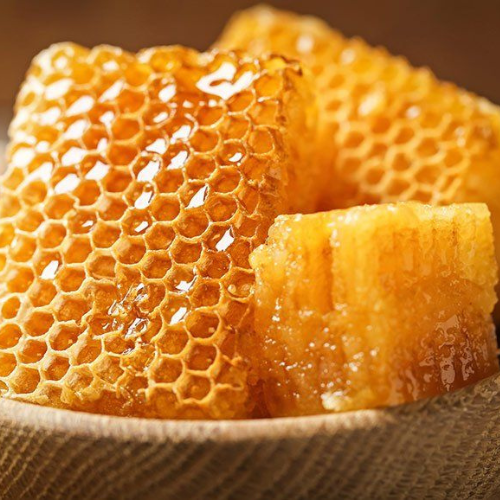
Look closely at a honeycomb and you will notice something that has puzzled and delighted scientists for centuries. Every single cell is a perfect hexagon. Not roughly hexagonal, not nearly hexagonal, but mathematically precise. Bees did not learn this from a textbook. So how do they do it, and why?
The hexagonal structure of honeycomb is one of the most studied examples of natural engineering in the world. It sits at the intersection of biology, mathematics, and physics, and the more you examine it, the more extraordinary it becomes. What looks like a simple waxy grid is actually the result of millions of years of evolutionary problem-solving, producing a structure so efficient that architects, aerospace engineers, and material scientists still model their work on it today.
To understand why hexagons won, you need to understand the challenge bees face. A worker bee must produce wax to build the comb, and that wax is metabolically expensive. A bee must consume roughly eight grams of honey just to produce one gram of beeswax. In a colony where resources are everything, wasting wax is not an option.
At the same time, the comb needs to store as much honey and as many larvae as possible while remaining structurally strong enough to hold its own weight plus the weight of everything inside it. Bees are essentially solving an optimization problem: how do you tile a flat surface with identical cells that hold maximum volume using minimum material?
This is a question mathematicians call the Honeycomb Conjecture, and it remained unproven for over two thousand years until mathematician Thomas Hales formally proved it in 1999. His proof confirmed what bees had already known instinctively: the hexagon is the most efficient shape for this exact task.
Only three regular shapes can tile a flat surface without leaving gaps: triangles, squares, and hexagons. Circles are the most efficient shape for holding volume, but circles leave gaps when packed together, and those gaps are wasted space. So circles are immediately ruled out for a structure that needs seamless walls.
Among the three shapes that do tile perfectly, hexagons have the smallest perimeter relative to their area. This means that for the same amount of enclosed space, a hexagon requires less wall material than a triangle or a square. Less wall material means less wax, which means more honey available to fuel the colony. The advantage is not dramatic in a single cell, but across tens of thousands of cells in a single hive, the material savings are significant.
Triangles require the most wall material of the three options. Squares are better but still have a higher wall-to-area ratio than hexagons. The hexagon sits at the mathematical sweet spot: it packs the most volume into the least perimeter of any shape that tiles without gaps.
This is where the story gets even more fascinating. Bees do not sit down and work out the geometry. They are not consciously choosing hexagons over squares. The hexagonal shape emerges from a physical process that is almost entirely automatic.
Bees initially build their cells as rough cylinders. Worker bees cluster tightly together and vibrate their bodies to generate heat, warming the wax to a semi-liquid state. As the soft wax cells press against each other under surface tension, they naturally deform into the shape that minimizes energy at every contact point. Physics, not calculation, produces the hexagon.
This was confirmed by researchers at the University of Cardiff who showed that bees start with circular cells and the hexagonal shape forms as the warm wax settles. The 120-degree angles at every junction are exactly what physics predicts when three surfaces of equal tension meet at a point. Bees discovered through evolution what physics makes inevitable.
Bees do not choose the hexagon. Physics chooses it for them. Evolution simply gave bees the instinct to create the conditions where physics could do its finest work.
Tru-CocoB Nature NotesBeyond material efficiency, the hexagonal grid is extraordinarily strong. Each cell shares its walls with six neighbours, which means every wall is doing double duty. Force applied to one cell is distributed evenly across all six surrounding cells rather than concentrating at a single point. This is called load distribution, and it is the same principle engineers use in bridge design and aircraft construction.
A honeycomb structure can support up to 25 times its own weight. The cells are also tilted at a precise angle of 13 degrees from horizontal, which is exactly the angle needed to prevent honey from flowing out before it is capped. This tilt is consistent across every comb in every hive. Bees build this angle without tools or measurement, guided entirely by gravity and the sensation of their own bodies.
The Honeycomb Conjecture, that hexagons are the most efficient tiling shape, was only formally proved by mathematician Thomas Hales in 1999 after 2000 years as an open problem.
Bees warm wax to around 45 degrees Celsius using body heat. At this temperature the wax flows just enough to self-organise into hexagons under surface tension.
Hexagonal honeycomb panels are used in aircraft floors, spacecraft walls, and racing car bodywork because they offer the best strength-to-weight ratio of any structural form.
Every junction in a honeycomb meets at exactly 120 degrees. This is not trained precision. It is the natural result of three equal surface tensions meeting at one point.
The hexagon is not unique to bees. Once you know what to look for, you will find it throughout the natural world. The basalt columns at Giant’s Causeway in Northern Ireland form near-perfect hexagons as lava cools and contracts. The same physics that shapes bee wax under tension shapes molten rock under stress.
Snowflakes grow with sixfold symmetry because of the molecular geometry of water ice crystals. The compound eyes of insects are made up of hexagonal lenses packed tightly together, maximising surface area for light collection. Even the pattern of cracking mud and dried clay tends toward hexagonal shapes because nature consistently finds this geometry at the point of minimum energy.
Every time you hold a piece of raw honeycomb from Tru-CocoB, you are holding the result of millions of years of evolutionary refinement arriving at a mathematically optimal solution. The structure that keeps the honey inside each cell, that holds the weight of the comb above it, and that was built with the minimum possible amount of wax, is a hexagonal grid that human engineers still study and replicate.
The wax walls you see are just 0.05 millimetres thick. Yet that structure, repeated across tens of thousands of cells, can bear loads that would collapse materials many times thicker. It is one of the most remarkable feats of natural construction on earth, and it happens inside a hive no bigger than a shoebox, built by creatures with brains the size of a sesame seed.
That is worth thinking about the next time you drizzle honeycomb over your morning yogurt. You are not just eating honey. You are eating the output of nature’s most elegant geometry lesson.
The hexagonal honeycomb is one of the clearest examples in nature of evolution arriving at a mathematically perfect solution through trial, error, and millions of years of refinement. Bees do not understand geometry the way mathematicians do, but they build with a precision that geometry can only confirm after the fact. The hexagon minimises wax, maximises storage, and distributes weight better than any other shape. Bees figured this out long before humans even had mathematics to describe it. When you eat raw honeycomb from Tru-CocoB, you are tasting the proof.