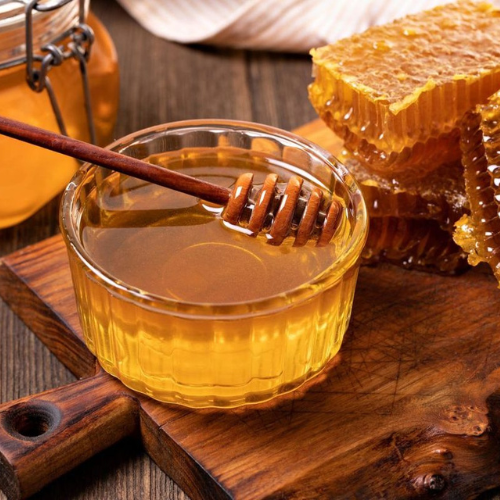
Pick up any two jars of raw honey from different parts of the world and taste them side by side. One might remind you of dark chocolate and molasses. The other might taste like delicate flowers with a citrus finish. Both are plain honey. No flavouring added. No vanilla extract. No cinnamon. Just bees, flowers, and time.
Most of us grew up thinking honey is honey. One flavour, one colour, one experience. That is exactly what big commercial brands want you to believe because blended, pasteurised, mass-produced honey is easier to manufacture, cheaper to source, and simpler to sell. But the truth is far more interesting. Honey is one of the most flavour-diverse natural foods on earth and every single one of those flavours was created by bees, not chemists.
So what about all those flavoured honeys lining supermarket shelves? The vanilla honey, the cinnamon honey, the lemon honey? That is a completely different story and one worth understanding before your next purchase.
The flavour of honey begins not in the hive but in the flower. When a worker bee lands on a blossom and draws up nectar through her proboscis, she is collecting a liquid that is chemically unique to that specific plant species. Nectar is not just sugar water. It contains hundreds of aromatic and chemical compounds including organic acids, esters, aldehydes, terpenes, and phenols, all of which vary dramatically between plant species.
As the bee flies back to the hive, she begins converting the nectar by mixing it with enzymes from her salivary glands. In the hive, she transfers the partially processed nectar to other worker bees, who continue the enzymatic conversion. Over several days, water evaporates from the nectar as bees fan the cells, concentrating the liquid until it reaches the thick, stable consistency we call honey. Throughout this entire process, the aromatic compounds that came from the flower are preserved and sometimes transformed into new flavour molecules, creating a final product whose taste is a direct fingerprint of the original plant.
The key point is that no flavouring was added at any stage. The bee did not go looking for vanilla. She went looking for nectar, and the vanilla-like butterscotch notes that appear in some honeys came from the specific aromatic compounds naturally present in those flowers. This is entirely the bee’s work and entirely natural.
The best way to understand natural honey flavour diversity is through a concept that wine lovers know well: terroir. In French, terroir means the taste of place. It refers to the way in which the specific combination of soil, climate, geography, and season where a grape is grown creates a wine that tastes unlike any other wine made from the same grape variety grown anywhere else.
Honey works in exactly the same way. A jar of buckwheat honey from upstate New York does not taste the same as buckwheat honey from Canada, even though the same bee species collected nectar from the same plant. The soil the buckwheat grew in was different. The rainfall was different. The temperature during bloom was different. All of these variables changed the nectar, and the nectar changed the honey.
Same grape, different vineyard = completely different wine. Soil, altitude, and climate shape the flavour.
Same bee, different flower or region = completely different honey. Plant species and landscape shape the flavour.
Bees are not just collecting nectar. They are collecting the chemical signature of an entire landscape. That signature survives the journey into the hive and ends up in your jar. That is what flavour means in real honey.
Tru-CocoB Honey NotesHere is proof that honey does not need flavouring. These are real honeys with completely natural, entirely bee-made flavour profiles. None of them have anything added. The flower did all the work.
Now for the part that most honey brands prefer you do not think too hard about. Artificially flavoured honey, or honey with “natural flavours added” as the label tends to say, is a fundamentally different product from single-origin raw honey. Here is what actually happens.
Commercial honey producers buy large volumes of bulk honey, often blended from multiple countries, at the lowest possible price. This honey has typically been pasteurised at high temperatures to make it shelf stable, ultra-filtered to make it visually clear and consistent, and blended from so many different sources that any distinctive natural flavour character has been averaged away to almost nothing.
To make this bland base product interesting again, and to command a higher price on the shelf, brands add flavour compounds. These may be described as “natural flavours” on the label, which in food labelling can mean a wide range of things including concentrated plant extracts and processed botanical derivatives. They are added to the honey after processing, not created by bees during the honey-making process.
In food labelling, “natural flavours” does not mean the honey itself tastes that way from its floral source. It means a flavour compound derived from a natural source was added to the honey after processing. This is a legal and common practice but it is not the same as raw honey whose flavour comes entirely from the flowers bees visited. When you see this phrase on a honey jar, the base honey was almost certainly bland and heavily processed before the flavour was introduced.
The label tells you everything if you know what to look for. Here is your complete guide to reading a honey label and making sure you are getting the real thing.
The most important word on any honey label. Confirms the honey has not been heated above natural hive temperature. Enzymes, antioxidants, pollen, and natural aromatic compounds are all preserved and intact.
Acacia, buckwheat, wildflower, orange blossom, sidr, manuka. A named floral source tells you the bees had a specific flower to visit and the flavour you are tasting came from that flower naturally. This is single-origin honey.
A good producer knows where their honey came from and is proud to tell you. Himalayan wildflower honey from a specific valley. Buckwheat honey from upstate New York. Origin transparency is a sign of quality and honesty.
Red flag. A flavour compound was added to the honey after processing. The base honey was likely bland commercial honey that needed help to taste interesting. The flavour you are tasting is not from bees visiting flowers.
Tells you the honey was assembled from multiple unknown sources for price uniformity. Any individual floral character has been averaged away. You cannot trace it to a specific flower or region.
If the label does not tell you what flowers the bees visited or where, the producer either does not know or does not want you to ask. Neither is a good sign. Real honey producers lead with this information because it is their biggest selling point.
Yes, genuinely and dramatically. There are over 300 documented honey varieties worldwide, each with a distinct natural flavour created entirely by the flowers bees visited. The difference between buckwheat honey and acacia honey is as dramatic as the difference between dark chocolate and white chocolate. All of it is natural. None of it requires any artificial or added flavouring to achieve.
Flavoured honey starts with real honey as a base but has flavouring compounds added after processing. The base is typically heavily processed commercial honey that has been pasteurised and filtered, stripping most of its natural flavour complexity and nutritional value. The added flavouring then creates the taste profile the brand wants to sell. It is not the same as raw single-origin honey whose flavour comes entirely from bees and flowers.
Because most supermarket honey is blended from multiple countries and floral sources, then pasteurised at high temperatures and ultra-filtered. The blending averages out any individual floral character. The pasteurisation destroys the volatile aromatic compounds that create distinctive flavour. What remains is a clean, mild, sweet liquid that tastes broadly similar regardless of where it originally came from. It is manufactured consistency, not natural flavour.
This is subjective but among honey experts and connoisseurs, Sidr honey from Yemen, Manuka honey from New Zealand, Buckwheat honey from North America, and Tupelo honey from the American South are consistently cited as the most distinctively flavoured and complex varieties. Indian wildflower honey from the Himalayas and forests of the Western Ghats is also celebrated for its seasonal complexity. Tru-CocoB sources raw honey that lets these natural flavour profiles speak for themselves without any processing or added flavouring.
Check the ingredient list on the label. Pure raw honey should list only one ingredient: honey. If you see “natural flavours,” “flavouring,” or any additional ingredients beyond honey, something has been added. Also look for the phrase “blend of various countries” on the label which indicates commercially blended honey that typically had its natural character processed away before being sold.
No. Tru-CocoB raw honey contains exactly one ingredient: raw honey. No flavourings, no additives, no preservatives, and no blending with honey from unknown sources. The flavour you taste comes entirely from the flowers the bees visited and the region where the honey was produced. That is the only way we believe honey should ever taste.
Honey does not need flavouring. It never did. The reason flavoured honey exists is not because plain honey is boring. It is because most commercially available honey has had its natural complexity processed, heated, and filtered away, leaving something bland enough that brands felt the need to add interest back in. The solution was never to add vanilla extract to a jar. The solution was to stop destroying what bees naturally created. Tru-CocoB raw honey is the answer to the question nobody should have needed to ask. It tastes the way it does because of which flowers the bees visited and nothing else. The next time someone offers you a jar of cinnamon honey or lemon honey, you will know exactly what that label is telling you about what was in the jar before the flavouring arrived.