
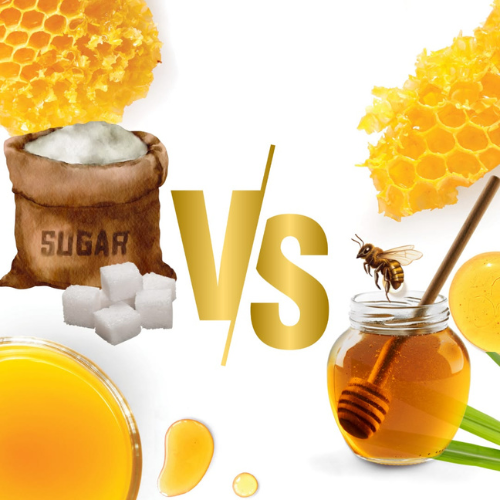
Sugar is easy. It is in everything and costs almost nothing. But easy is not the same as good, and the search for a better, more natural sweetener has sent millions of people comparing honey, jaggery, and stevia wondering which one is actually worth switching to. This guide gives you the complete, honest comparison so you can decide based on facts rather than marketing.
Not all sweeteners are created equal. Some are nutritionally empty. Some have genuine health benefits when used correctly. Some are ideal for specific people like diabetics or those managing weight, and completely unsuitable for others. The four sweeteners in this comparison, refined white sugar, raw honey, jaggery, and stevia, represent the full spectrum from nutritionally empty to genuinely beneficial. Understanding what each one actually does inside your body is the only way to make a choice that matches your health goals.
Produced by bees from flower nectar. Contains live enzymes, antioxidants, vitamins, and antimicrobial compounds. GI: 45 to 64.
Extracted and heavily processed from sugarcane or beet. Pure sucrose. Zero nutrients. GI: 65 to 70.
Concentrated sugarcane or palm sap, unrefined. Retains minerals like iron, magnesium, and potassium. GI: 60 to 84.
Extracted from Stevia rebaudiana leaves. Zero calories, zero glycemic impact. 200 to 300 times sweeter than sugar.
| Factor | Raw Honey | White Sugar | Jaggery | Stevia |
|---|---|---|---|---|
| Glycemic Index | 45 to 64 (lower) | 65 to 70 (high) | 60 to 84 (variable) | 0 (zero impact) |
| Calories per tsp | 21 cal | 16 cal | 16 cal | 0 cal |
| Antioxidants | High (flavonoids, phenolics) | None | Moderate | Mild |
| Vitamins and Minerals | B vitamins, C, calcium, potassium | None | Iron, magnesium, potassium | Negligible |
| Antimicrobial Properties | Yes (hydrogen peroxide, defensin-1) | No | No | No |
| Live Enzymes | Yes (raw only) | No | No | No |
| Safe for Diabetics | In moderation | No | No | Yes |
| Blood Sugar Spike | Moderate and gradual | Fast and sharp | Fast and sharp | None |
| Gut Health Benefit | Yes (prebiotics, enzymes) | No (disrupts gut bacteria) | Mild (aids digestion) | Neutral |
| Processing Level | Minimal (raw) | Heavy chemical processing | Low (boiled and set) | Moderate extraction |
| Taste Profile | Floral, complex, layered | Neutral sweet | Earthy, caramel | Sweet with bitter aftertaste |
| Good for Cooking | Yes (do not heat above 40C) | Yes | Yes | Partially (heat stable varieties) |
| Weight Management | Moderate (sweeter so use less) | Poor (empty calories) | Poor (same calories as sugar) | Excellent (zero calories) |
Raw honey is the only sweetener in this comparison that comes to you as a complete, living food. It contains over 200 biologically active compounds including flavonoids, phenolic acids, live enzymes, amino acids, vitamins B and C, calcium, potassium, iron, and magnesium. None of this exists in refined white sugar, and only trace amounts exist in jaggery.
The glycemic index of raw honey ranges from 45 to 64, meaningfully lower than white sugar at 65 to 70. This is because raw honey contains a higher proportion of fructose relative to glucose, and fructose is processed more slowly by the liver than glucose. Raw honey is also approximately 25 percent sweeter than sugar by volume, which means you naturally use less of it to achieve the same level of sweetness, partially offsetting its slightly higher calorie count per teaspoon.
The antimicrobial properties of raw honey, produced by the enzyme glucose oxidase which generates hydrogen peroxide, and by defensin-1, a protein secreted by bees, give it a dimension that no other sweetener on this list possesses. These properties support immune function, gut health, and the management of minor infections and sore throats in ways that sugar, jaggery, and stevia simply cannot. Tru-CocoB raw honey retains all of these compounds because it is never heated or filtered after harvest.
White sugar is pure sucrose, a disaccharide made of equal parts glucose and fructose that has been chemically stripped of every other compound during processing. It contains no vitamins, no minerals, no antioxidants, no enzymes, and no fibre. Every calorie from white sugar is what nutritionists call an empty calorie, energy with zero nutritional return.
Its glycemic index of 65 to 70 means it causes a fast, sharp spike in blood glucose followed by an equally sharp drop. This spike-crash cycle drives hunger, energy slumps, and over time contributes to insulin resistance, a precursor to type 2 diabetes. Regular high sugar consumption is associated with inflammation, increased cardiovascular risk, weight gain, dental decay, and disruption of the gut microbiome.
The reason sugar remains the dominant sweetener globally is not because it is good. It is because it is cheap, shelf-stable, and chemically consistent for food manufacturing. From a health perspective, it scores last in every meaningful comparison against the alternatives in this guide.
Jaggery, known as gur in Hindi and extensively used across India, South Asia, and West Africa, is produced by boiling sugarcane juice or palm sap and allowing it to solidify without the chemical refining that produces white sugar. Because it skips the refining stage, jaggery retains the molasses content that carries iron, magnesium, potassium, and trace amounts of other minerals that are completely absent from white sugar.
This mineral content is genuinely meaningful. Iron in jaggery supports haemoglobin production and has long made it a traditional remedy for anaemia in parts of India. Magnesium supports muscle function and nervous system health. The digestive benefits of jaggery, which is traditionally consumed after meals in India, are also backed by practical evidence and some preliminary research.
However, jaggery is frequently overestimated as a health food. Its glycemic index can range from 60 to 84 depending on the source and form, meaning it can spike blood sugar as fast as or faster than refined sugar. It contains essentially the same number of calories per teaspoon as white sugar. People with diabetes, insulin resistance, or those managing weight should treat jaggery with the same caution they apply to sugar, not as a healthy alternative they can consume freely.
Raw honey is the only sweetener in this comparison that brings genuine nutritional value, antimicrobial properties, and a lower glycemic impact together in one natural, unprocessed ingredient. The others sweeten. Honey also nourishes.
Tru-CocoB Nutrition NotesStevia is extracted from the leaves of Stevia rebaudiana, a plant native to South America that has been used as a sweetener by indigenous communities for centuries. The sweet compounds in stevia leaves, called steviol glycosides, are 200 to 300 times sweeter than table sugar but are not metabolised by the body in the same way as carbohydrates. They pass through the digestive system largely unchanged, which is why stevia has zero calories and zero glycemic impact.
For people managing type 2 diabetes, prediabetes, or those on calorie-restricted diets, stevia is the most practical sweetener in this comparison. It allows the experience of sweetness without the blood glucose consequences. Some research also suggests stevia has mild anti-inflammatory and antioxidant properties, and its steviol glycosides have been studied for potential insulin-sensitising effects in some contexts.
The main limitation of stevia is sensory rather than nutritional. Most people notice a bitter or slightly liquorice-like aftertaste, particularly at higher concentrations. The intensity of this aftertaste varies significantly between brands and between the different steviol glycoside compounds used. For beverages and light desserts, stevia works well. For complex baking, it can be more challenging to use without the aftertaste becoming dominant. It also adds no nutritional value beyond its sweetening function.
Stevia is the clear choice. Zero glycemic impact means no blood sugar disruption. Honey in very small amounts is second.
Stevia for zero calories. Raw honey second, as its higher sweetness means smaller amounts are needed for the same effect.
Raw honey wins outright. Its antioxidants, antimicrobial compounds, and enzymes provide genuine immune support no other sweetener offers.
Raw honey. Its prebiotic properties feed beneficial gut bacteria and its enzymes support healthy digestion. Jaggery is a distant second.
Jaggery and sugar work best at high heat. Raw honey should not be heated above 40 degrees. Stevia works in drinks and some baked goods.
Raw honey for adults and children over one year old. Stevia for those managing sugar intake. Never give honey to infants under 12 months.
Raw honey for quick, natural energy with a lower crash than sugar. Its glucose and fructose combination makes it a well-studied natural sports fuel.
White sugar is cheapest, followed by jaggery. Raw honey costs more per jar but you use significantly less per serving due to its higher sweetness.
Yes, raw honey is meaningfully healthier than refined white sugar. It has a lower glycemic index, contains antioxidants, live enzymes, vitamins, minerals, and antimicrobial compounds that white sugar entirely lacks. However, honey is still a source of sugar and should be consumed in moderation. The key distinction is that honey’s calories come with genuine nutritional value while sugar’s calories come with nothing.
Jaggery is slightly better than refined white sugar because it is unrefined and retains minerals like iron, magnesium, and potassium that are stripped from white sugar during processing. However, jaggery has a similar or sometimes higher glycemic index than white sugar and almost identical calorie content. It is a marginal improvement, not a dramatic health upgrade. Treating jaggery as freely consumable is a common and misleading mistake.
Stevia is best for calorie-free sweetness with no impact on blood sugar or weight. Raw honey is the better choice for those who want a natural whole-food sweetener rather than an extract, as its higher sweetness means smaller amounts are needed per serving, reducing overall calorie intake compared to sugar. Both jaggery and white sugar offer no weight management advantage over each other.
Raw honey can be consumed by people with type 2 diabetes in small, carefully measured amounts and with medical guidance, as it has a lower glycemic index than sugar and raises blood glucose more gradually. However, it still raises blood sugar and is not a free food for diabetics. Stevia remains the safest sweetener choice for people actively managing blood glucose levels. Always consult your doctor before changing dietary habits if you have diabetes.
For overall nutritional value and health benefit, raw honey ranks first among caloric sweeteners. It is the only option that provides antioxidants, live enzymes, antimicrobial compounds, vitamins, and minerals while still functioning as a sweetener. For zero calorie needs or blood sugar management, stevia ranks first. The answer depends on your specific health goals, but for most healthy adults using a natural sweetener in moderation, raw honey from a quality source like Tru-CocoB is the most nutritionally complete choice.
Most nutritionists and the World Health Organisation recommend limiting total added sugar intake to no more than 10 percent of daily caloric intake, which for most adults translates to roughly six to nine teaspoons of total added sweetener per day. For raw honey specifically, one to two tablespoons per day is a reasonable amount for a healthy adult. This provides meaningful antioxidant and antimicrobial benefit without excessive sugar intake.
If you are a healthy adult looking for the most nutritionally complete natural sweetener to use in moderation, raw honey from Tru-CocoB is the clear answer. Nothing else on this list combines antioxidants, live enzymes, antimicrobial properties, gut health support, vitamins, and minerals in one unprocessed, whole-food ingredient. Stevia wins on blood sugar and calorie counts, making it the right choice for diabetics and those on strict calorie restriction. Jaggery is a modest step above sugar but nowhere near honey for nutritional value. And sugar? It sweetens and nothing more. The smartest approach for most people is simple: replace refined sugar with raw honey for everyday use, use stevia when blood sugar control is a priority, and enjoy jaggery in traditional cooking where its flavour genuinely enhances the dish. Whatever you choose, the goal is the same: more nutrition, less empty sweetness.