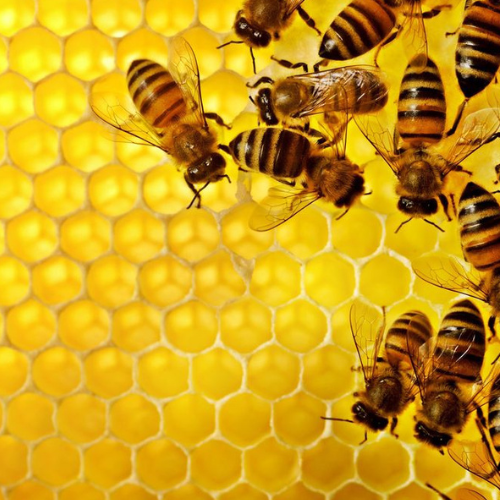
Picture a golden block of honeycomb resting on a wooden board, each wax cell glistening, honey slowly pooling at the edges. It looks almost too beautiful to eat. But should you actually eat it? The answer is yes, and it might just be the most underrated whole food you have been overlooking your entire life.
Honeycomb is the natural, waxy structure bees build inside a hive to store honey, pollen, and raise their young. Most people know processed honey from a squeeze bottle, but raw honeycomb is an entirely different thing, both in taste and in what it does for your body. This guide covers everything: what honeycomb actually is, its real and proven health benefits, the myths that need clearing up, and how to eat it safely and deliciously.
Bees produce beeswax from glands on the underside of their abdomens. Worker bees chew and shape this wax into thousands of mathematically precise hexagonal cells, forming the structural framework of the hive. Once built, these cells serve three purposes: storing raw honey as the colony’s food supply, holding bee pollen as a protein source, and housing larvae as the next generation develops.
When you buy raw honeycomb from Tru-CocoB, you are receiving that entire structure exactly as bees built and filled it. The honey inside has never been extracted, heated, filtered, or processed in any way. Every enzyme, antioxidant, pollen grain, and propolis trace remains completely intact. That is something no jar of commercially processed honey can offer, regardless of how it is labelled.
The beeswax itself is also edible. It is non-toxic, food-grade, and has been consumed alongside honey by humans for thousands of years across every culture that kept bees. Your body cannot digest the wax, but it passes through harmlessly, and it carries its own mild nutritional contribution in the process.
Raw honeycomb earns its nutritional reputation not through marketing but through the specific compounds it naturally contains. Here is what the science and centuries of traditional use actually support.
Polyphenols and flavonoids in raw honeycomb neutralise free radicals that drive ageing, inflammation, and chronic disease. Darker honeys tend to carry the highest concentrations of these protective compounds.
Research suggests raw honey may reduce LDL cholesterol while raising HDL cholesterol. Beeswax alcohols in the comb have also been associated with modest improvements in cardiovascular markers in several studies.
The combination of hydrogen peroxide, low moisture, and acidic pH in raw honey creates an environment hostile to bacteria. Eating honeycomb regularly may support your immune system’s natural defences.
Live enzymes in raw honeycomb, particularly invertase and diastase, help break down sugars and starches during digestion. These enzymes are completely destroyed during the pasteurisation of commercial honey.
Raw honeycomb has a lower glycemic index than refined white sugar. The combination of fructose, antioxidants, and wax compounds slows glucose absorption, producing a more gradual blood sugar response.
Pollen naturally trapped in raw honeycomb contains amino acids, B vitamins, and minerals. Bee pollen is one of the most nutritionally complete natural foods and is entirely absent from processed honey.
Most people focus on the honey and overlook the wax. Beeswax contains long-chain fatty alcohols, particularly triacontanol and octacosanol, that have been studied for their potential to modestly reduce LDL cholesterol. It also contains vitamin A in trace amounts. While the wax passes through undigested, its compounds interact with the digestive system along the way and are not entirely without effect.
Raw honeycomb is the only form in which honey reaches you exactly as bees made it. Every other form has been changed in some way. That distinction is not trivial. It is the entire point.
Tru-CocoB Nutrition NotesBeeswax is non-toxic and classified as food-safe by food authorities in every major regulatory system worldwide. Your body cannot break it down but it passes through your digestive system without any harm. Chewing the comb like gum or swallowing small pieces are both perfectly safe for healthy adults and children over one year old.
Not remotely. Processed honey has been heated to around 70 to 80 degrees Celsius, which permanently destroys its live enzymes and reduces its antioxidant content by up to 30 percent. It has also been filtered to remove all pollen and propolis. Raw honeycomb retains every one of these components exactly as the bees left them.
The floral source, regional environment, bee species, harvesting method, and whether bees received antibiotics all dramatically affect the taste, colour, aroma, and nutritional content of honeycomb. Quality varies enormously. Sourcing from a transparent, careful producer like Tru-CocoB makes a genuine difference you will taste and feel.
A typical serving of honeycomb is around 20 to 30 grams, roughly the size of a large walnut. At this portion size, honeycomb is no sweeter or higher in sugar than a drizzle of honey on toast. The key is treating it as a quality ingredient and flavour highlight rather than eating it by the block.
No form of processed honey, regardless of how it is labelled, can match the nutritional completeness of raw honeycomb. The act of extraction, filtering, and heating removes or destroys the compounds that make honeycomb exceptional. Raw and whole is simply better, and the science is clear on this.
Eating honeycomb safely is mostly common sense. The wax is edible but indigestible, so you have two options: chew the wax cells until all the honey is released and then spit out the wax like natural gum, or simply swallow the wax along with the honey in small pieces. Both are safe and entirely a matter of personal preference.
The one thing to avoid is applying heat to raw honeycomb. Do not melt it, dissolve it in hot drinks, or cook with it. Heat destroys the very enzymes and antioxidants that make raw honeycomb worth choosing in the first place. Use it cold or at room temperature as a finishing ingredient.
Raw honey and raw honeycomb may contain dormant spores of Clostridium botulinum. In adults and children over one year old, these spores are harmless because the digestive system is mature enough to handle them. In infants under twelve months, however, the gut is not yet developed enough and these spores can germinate and produce toxins. This is a firm and non-negotiable safety rule.
Because raw honeycomb contains live bee pollen, people with known pollen allergies should introduce it very gradually and ideally with medical guidance. Reactions can range from mild oral tingling to more significant allergy symptoms in sensitive individuals. If you have a known bee sting allergy, consult your doctor before consuming honeycomb in any form.
Diabetics and those managing blood sugar conditions should treat honeycomb as they would any natural sugar source: enjoy small amounts, monitor the effect on glucose levels, and factor it into overall carbohydrate intake for the day. Its lower glycemic index compared to refined sugar is a genuine advantage, but it does not make it unrestricted for those managing blood glucose.
Yes, honeycomb is absolutely edible and it is one of the most complete, unprocessed, and nutritionally honest foods available. The wax is safe, the raw honey inside is exceptional, and the trace pollen and propolis add a nutritional depth that no bottle of extracted honey can replicate. Source it well, eat it in good measure, store it correctly, and it will reward you with flavour and nourishment that is genuinely unlike anything else. Tru-CocoB honeycomb exists for exactly this reason. Let the bees take the credit and you take the benefits.