
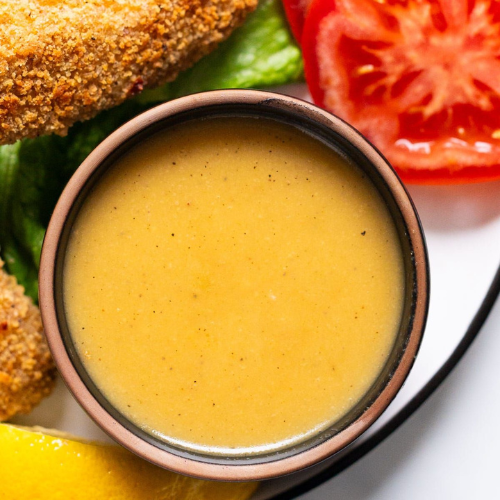
Every salad dressing you have ever bought from a supermarket shelf has something in common: a list of ingredients you did not need and a flavour that fades. This one has neither. Five ingredients, five minutes, and a jar of Tru-CocoB honey — and you will never reach for a store-bought bottle again.
Honey mustard is one of the oldest flavour combinations in the world. Mustard seeds were being cultivated in the Indus Valley as far back as 3000 BCE. Honey has been used as a food and medicine across civilisations for at least ten thousand years. Together, they create something that professional chefs call a perfect pairing: the sharpness of mustard tempered by the warmth and natural sweetness of raw honey, balanced with lemon and a little depth from curd. What you get is a dressing that works on salads, as a sandwich spread, on grilled paneer, on fruit chaat, and even as a marinade. One recipe. Many uses.
Every ingredient in this dressing earns its place. There is no filler, no thickener, no mystery compound. Just five real foods that have been trusted in Indian kitchens for generations.
| Ingredient | Quantity | What It Does in the Dressing | Notes |
|---|---|---|---|
| Tru-CocoB Raw Honey | 2 tablespoons | Provides natural sweetness, floral depth, and helps bind the dressing into a smooth emulsion | Use raw — processed honey lacks the natural complexity that makes this dressing exceptional |
| Dijon or Kasundi Mustard | 1 tablespoon | Delivers sharpness, acts as a natural emulsifier, and adds body to the texture | Kasundi gives a spicier, more Indian character; Dijon is milder and more versatile |
| Thick Curd (Dahi) | 3 tablespoons | Adds creaminess without oil, provides a subtle tang, and gives the dressing its body | Use hung curd or thick dahi for a richer, creamier result that coats salad leaves well |
| Fresh Lemon Juice | 1 teaspoon | Brightens all the other flavours and keeps the dressing fresh-tasting | Freshly squeezed only — bottled lemon juice contains preservatives that mute the brightness |
| Salt and Black Pepper | To taste | Salt amplifies every other flavour; pepper adds a gentle warmth to finish | Add salt gradually — taste as you go, especially if your mustard is already salty |
Honey is not just a sweetener in this recipe. It is a flavour ingredient. Raw honey like Tru-CocoB carries natural floral notes, subtle acidity, and aromatic complexity from the flowers bees visited. When you use heavily processed or artificial honey, you are adding sweetness but losing depth. The dressing will taste flat — sweet and sharp with nothing in between. Use raw honey and the result is layered: sweet, then floral, then sharp, then tangy, all in one spoonful.
This is the simplest recipe you will make this week. There is no cooking, no special equipment, and no technique that requires practice. A bowl, a whisk or a fork, and five minutes are all that stand between you and the only dressing your kitchen will need.
Spoon the thick curd into a bowl and whisk it briskly for thirty seconds until it is completely smooth with no lumps. This step ensures the finished dressing has a uniform, creamy texture. Lumpy curd will produce an uneven dressing that does not coat ingredients evenly.
Add the Dijon or kasundi mustard and Tru-CocoB raw honey to the curd at the same time. Whisk together until the two are fully incorporated into the curd base. The mustard begins its work as an emulsifier here, helping the honey and curd combine into a single, stable texture.
Add the fresh lemon juice directly from the fruit — no bottled substitutes. Add a small pinch of salt and a few cracks of black pepper. Whisk again for twenty seconds to bring everything together. At this point, taste the dressing and adjust: more honey if you want it sweeter, more mustard for heat, more lemon for brightness.
Let the finished dressing sit for two minutes before using or refrigerating. This brief rest allows the flavours to settle and meld — the honey softens the sharpness of the mustard, the lemon lifts everything, and the curd pulls it all into a single unified flavour. Two minutes makes a noticeable difference.
Transfer any leftover dressing to a clean glass jar with a tight lid and refrigerate immediately. Because this dressing contains fresh curd and no preservatives, it will stay fresh for up to seven days in the refrigerator. Stir well before each use as the curd and honey may settle slightly after standing.
The difference between this dressing and what is in a supermarket bottle is not technique. It is honesty. Five real ingredients that you can name. No list of stabilisers, thickeners, and flavour compounds that nobody asked for.
Tru-CocoB Kitchen NotesThis is not marketing. There is actual chemistry behind why the quality of honey changes the outcome of this recipe.
Raw honey contains natural enzymes, trace acids, and over 200 aromatic compounds that processed honey does not. When raw honey meets the acidic environment of lemon juice and curd, a gentle interaction occurs between the honey’s natural acids and the curd’s lactic acid bacteria byproducts. The result is a flavour that is more rounded and complex than processed honey can produce in the same recipe.
Processed honey, by contrast, has been heated to 70–80 degrees Celsius, destroying most of its aromatic compounds and natural enzymes. What remains is primarily a fructose-glucose sweetener with a uniform, one-dimensional taste. In a recipe where honey is meant to be a flavour note rather than just a sweetener, that flattening is directly noticeable.
Tru-CocoB raw honey carries the natural aromatic signature of the flowers from which it was made. These floral compounds — particularly the terpenoids and phenolic acids naturally present in raw honey — create the warm, nuanced sweetness that makes this dressing work at a level processed honey simply cannot reach.
Once you have made this, you will find yourself reaching for it constantly. It is not a single-use condiment — it is one of the most versatile sauces you can keep in your refrigerator.
Cold raw honey can be thick and difficult to whisk smoothly. Take your Tru-CocoB honey jar out of the refrigerator ten minutes before you start, or sit it briefly in a bowl of warm water. Room temperature honey blends into the curd effortlessly in seconds.
Mustard varieties differ significantly in their saltiness. Some kasundi mustards are very salty on their own. Taste the dressing before adding any salt and add just a little at a time. You can always add more — you cannot take it out.
The acidity of the lemon juice and curd can interact with plastic containers over time. A small glass jar with a tight lid keeps the dressing fresh longer and does not absorb odours the way plastic does. A clean jam jar works perfectly.
Because this dressing is curd-based and contains fresh lemon juice, it will wilt leafy greens quickly. Dress your salad only just before serving. Keep the dressing in its jar and let each person add their own at the table if you are serving a group.
Raw honey should never be heated above 40 degrees Celsius — doing so destroys the natural enzymes that make it nutritionally valuable. This dressing is designed to be served cold or at room temperature. If you want to use it as a glaze, apply it after cooking, not before or during.
Thin, watery curd will produce a runny dressing that slides off salad leaves rather than coating them. Full-fat thick dahi or hung curd is essential. If your curd is too thin, hang it in a muslin cloth for fifteen minutes before using to drain off excess whey.
Yes. Replace the curd with one tablespoon of olive oil or two tablespoons of cashew cream for a dairy-free version. The olive oil version will be slightly thinner and less creamy but still excellent. The cashew cream version is richer and closer to the original in texture. Either way, keep the honey, mustard, lemon and seasoning exactly as written.
Made with full-fat curd and stored in a sealed glass jar in the refrigerator, this dressing stays fresh for five to seven days. Raw honey is naturally antibacterial — its presence in the dressing actually helps preserve freshness slightly longer than a plain curd-based dressing would last. Always stir or shake before using, and discard if it develops an off smell or changes colour significantly.
Dijon mustard is smooth, milder, and slightly tangy — it creates a more neutral, versatile dressing that works on most salads and as a spread. Kasundi is a Bengali mustard condiment made from black and yellow mustard seeds fermented with raw mango, ginger and spices. It is sharper, more pungent, and distinctly Indian in character. Kasundi produces a dressing with more heat and a more complex base. Both are excellent — Dijon is easier to find and more versatile; kasundi is more interesting and more distinctly Indian.
Yes, with one modification. For marinades, the raw honey in the dressing will cause the surface of the protein to caramelise quickly during cooking, which can lead to burning before the interior is cooked through. Either reduce the honey quantity by half when using as a marinade, or apply the dressing after cooking rather than before — as a finishing drizzle over freshly grilled paneer or chicken. The post-cooking method also preserves the raw honey’s natural enzymes and flavour complexity better than cooking would.
Any raw, unprocessed honey will produce a better result than processed supermarket honey in this recipe. The reason Tru-CocoB works particularly well is that it is raw and unfiltered, preserving the natural aromatic compounds and floral notes that processed honey has had heated and filtered away. In a recipe where honey is a primary flavour note rather than a background sweetener, the difference between raw and processed honey is immediately noticeable in the finished taste. Use the best honey you have — this dressing will reflect it directly.
This is the dressing that the bottle in your refrigerator door was always trying to be. It took no cooking, no special skill, and five minutes. The honey is raw and traceable to the flowers that made it. The mustard is real fermented grain. The curd is full-fat and honest. The lemon was squeezed today. Every ingredient has a story that ends in your kitchen, not in a manufacturing facility. That is not a small thing. That is the entire point of cooking with real food. Make it once, and the bottles on supermarket shelves will never look the same way again.